
A Letter to Parents of young Artists, Part 1
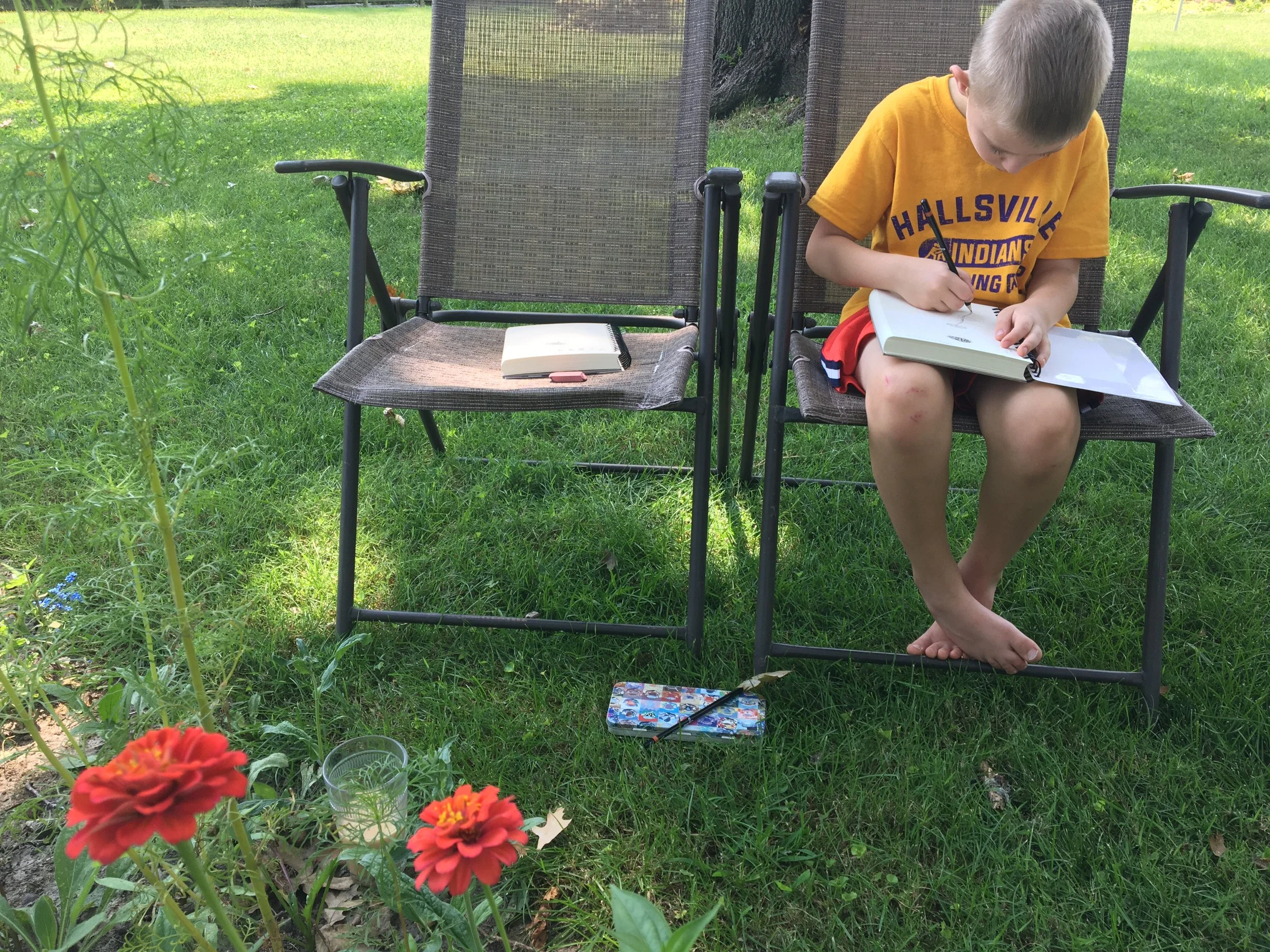
Drawing is for everyone. When my son was little, we would sit outside and practice drawing things around us.
Dear Parents of Young Artists,
When I was 4 years old, we moved to a new town where I met my preschool Sunday school teacher Miss Elaine. Elaine was (and is) a skilled artist. Two of her ink and watercolor paintings hang in the church’s foyer. One is of the original church building that no longer exists and the other of the new, existing building. Miss Elaine made intricately artistic displays for various occasions at church and a few times I “helped” her hang them up. Elaine also painted incredibly detailed miniature landscapes for doll houses, complete with little frames that she also built. She gave her students tiny books of illustrated children’s poems. I still have one of her mini paintings and the little book of poems.
Our small town was no where near an art museum. I don’t think I even knew they existed. In fact, I grew up pretty unaware of gallery art in general. I was in my 20’s before I visited an art museum. But I loved illustrations from books and poured over piles of books in my home and the library. Elaine had a love for art history and illustration history. She kept files of different illustrators containing print outs of their biographies and their artwork. I remember her introducing me to the work of several of my favorite illustrators whose techniques I tried to copy as I developed my own. My elementary school librarian, also shared her love and knowledge of illustrated children’s books. Through Elaine, God gave me a love for drawing, encouragement to develop that ability, and an appreciation for illustrators of history.
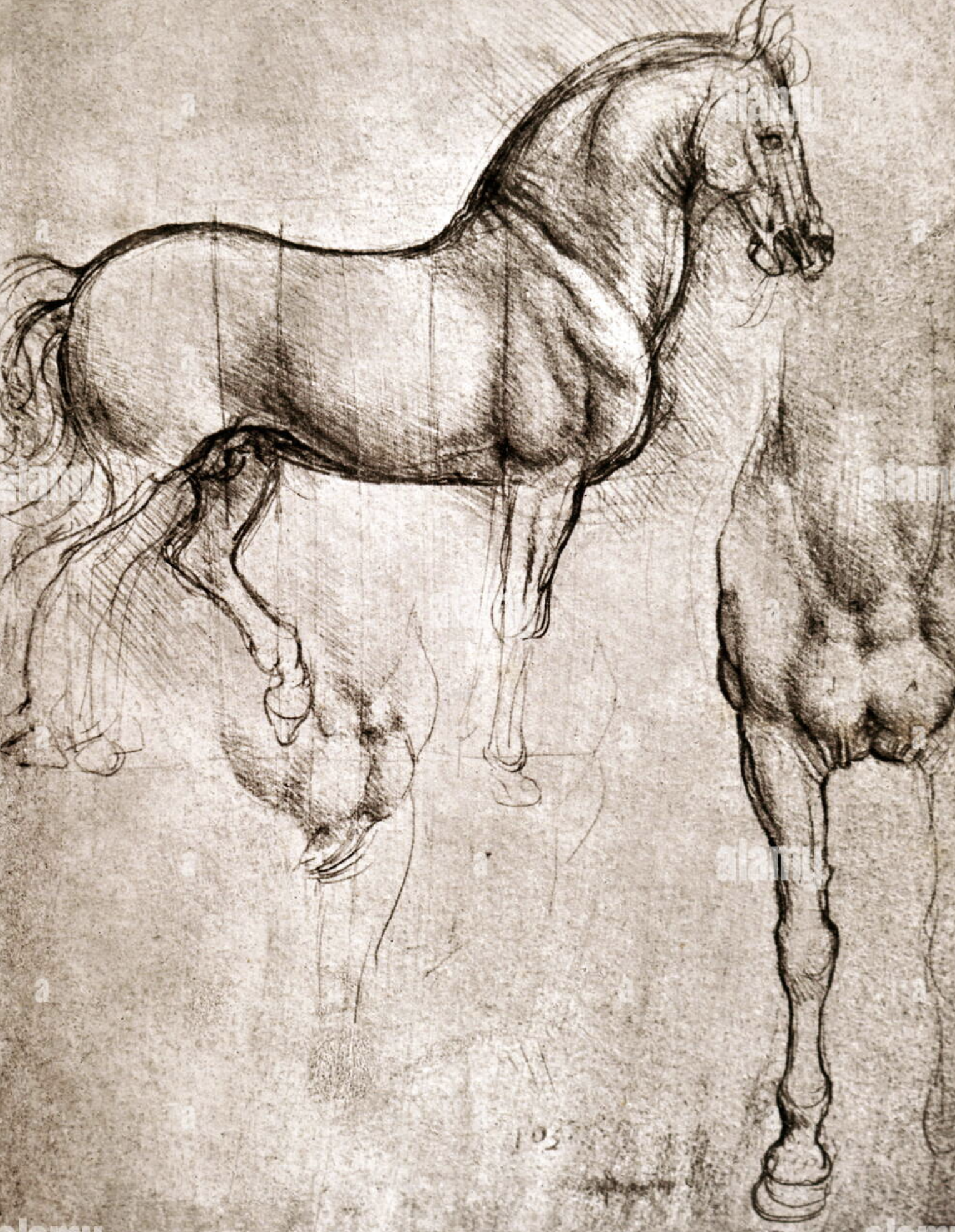
Leonardo Da Vinci treated drawing as a way of thinking. His sketches of plants, human bodies, water currents, and machines record what he actually saw rather than what convention told him to depict.
Today I enjoy meeting moms and dads of kids with natural art abilities. Maybe they love to draw or have a unique sensitivity in how they view the world. Or maybe they talk about color or design in a way that is unusual. I’ve heard parents mention this so frequently that I suspect God uniquely gifts at least one member in most families with a unique artistic ability.
Then the conversation tends to follow a progression based on 3 questions that parents tend to ask me, usually in the same succession. Today I’m going to outline those questions and give very brief answers. In future letters/blog posts, I’ll go into more detail.
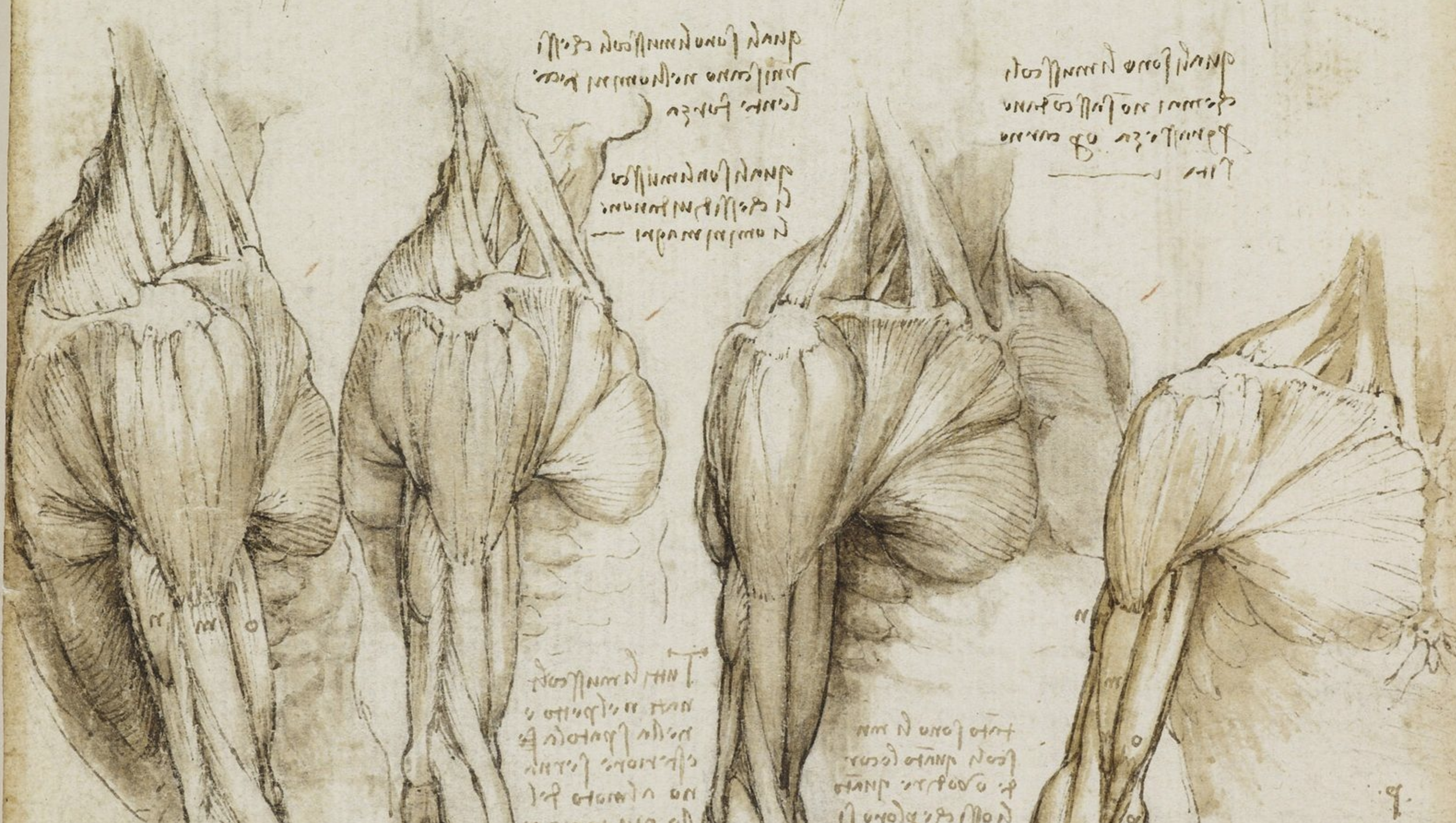
Leonardo da Vinci’s drawings are not simple sketches. They detail how his mind moved between art, science, and engineering without treating them as separate disciplines.
The first question is, “How do I develop artistic ability in myself or my child?
My answer? “Observational Drawing” and “A Biblical View of Art.”
By “Observational Drawing,” I’m referring to the translation of three-dimensional objects or scenes onto a two-dimensional surface, with real pencils and real paper (no digital means until observational drawing is mastered). This trains the brain in more ways than can be said in this blogpost.
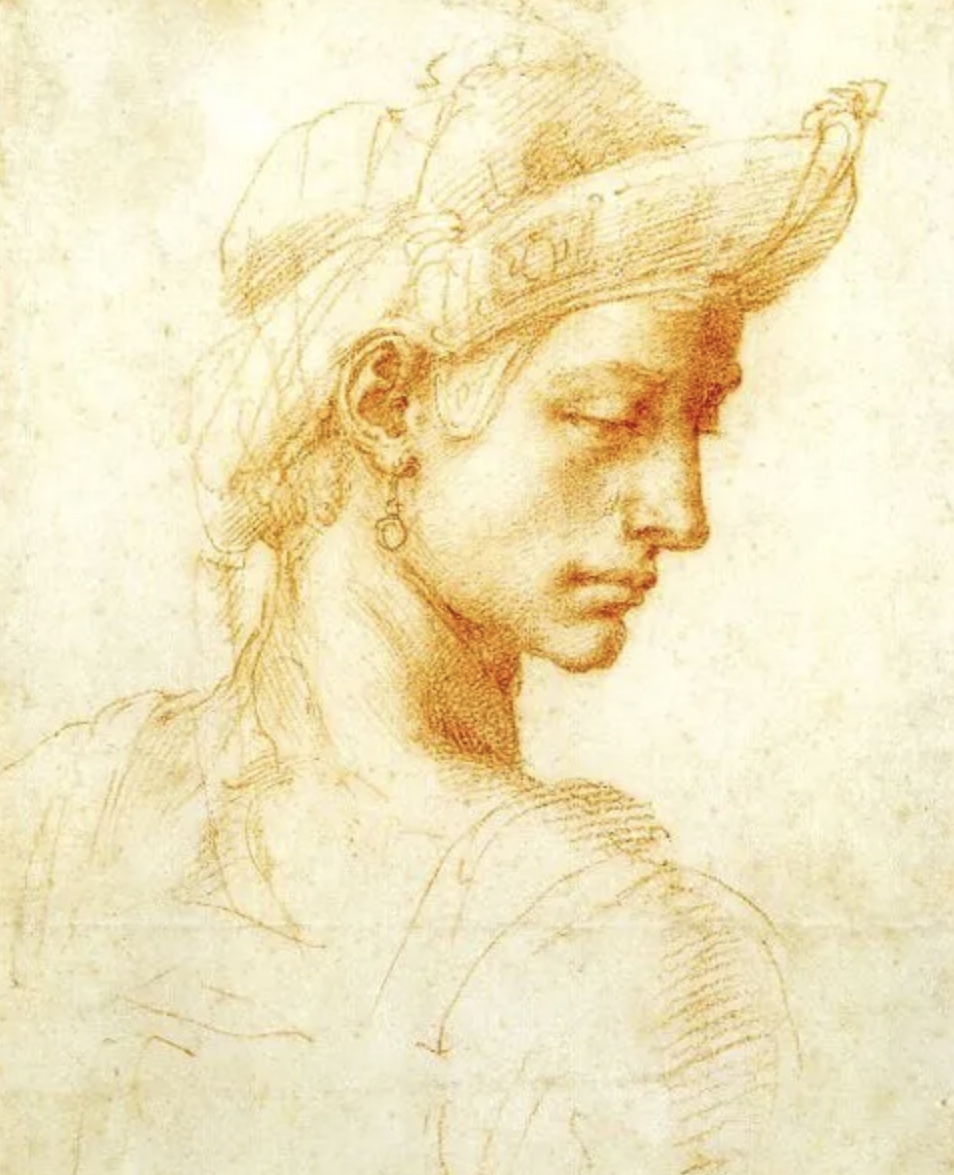
Michelangelo may be best known for painting the Sistine Chapel, but he leaves behind scores of incredible drawings that he made in preparation for the Chapel ceiling. From this drawing we see how a master can use subtle emphasis of tone to direct the viewer’s eye, even in a realistic drawing.
We sign our kids up for sports even when we do not expect them to play professionally as adults. We do this because it instills a myriad of life skills. Playing sports teaches self-discipline, teamwork, reflexes for different scenarios, how to shake off mistakes, how to win, how to lose . . . all things that transfer to all areas of life.
Observational drawing is similar. It instills skills that go beyond pencil and paper. I think it is a valuable practice whether you plan to make a career in art or not. For one thing, to create a compelling yet accurate drawing a person must master the ability to mentally hold opposing things in tension at the same time. For example, you must see the tiniest of details and the whole of your subject simultaneously. you must grasp how something actually appears while making choices to include and exclude aspects of it. You must mentally break down a subject into line, shape, and value yet dynamically capture the life of the subject. You must quickly capture the gesture while slowing down to capture the details. Observational drawing teaches the brain to break down a complex problem into small steps. The practice of drawing real life things teaches spacial awareness, proportion, and how light interplays with form. I believe this is especially valuable in our digital age when we tend to focus things appearing on backlit 2D screens.
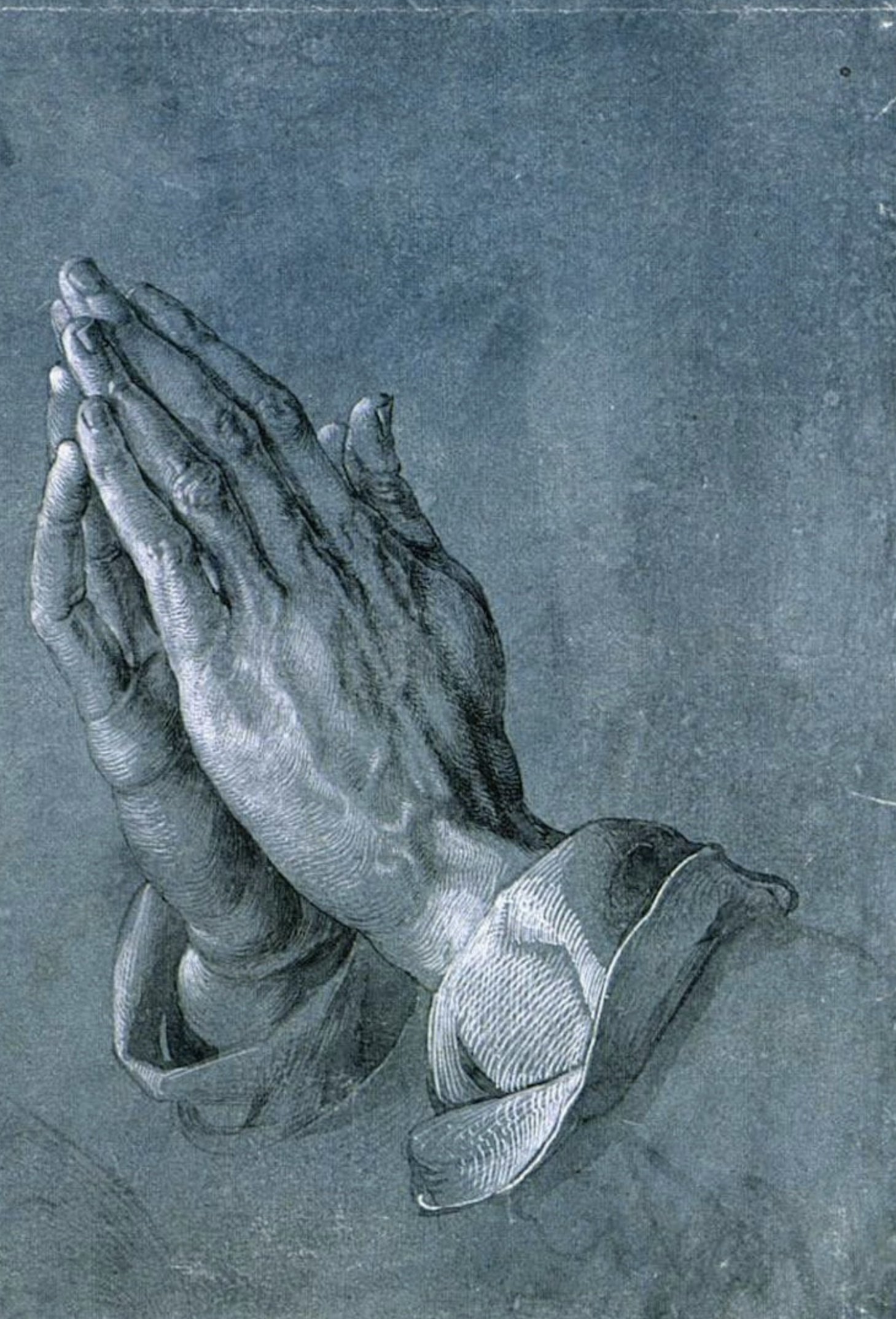
This drawing by Albrecht Durer demonstrates adding lighter and darker chalk to a mid-tone surface is a great way to express the 3D in 2D form.
I believe observational drawing is the basis for all visual arts. Even if a person’s interest is in animation or graphic design or fine art, observational drawing is still the best foundation.
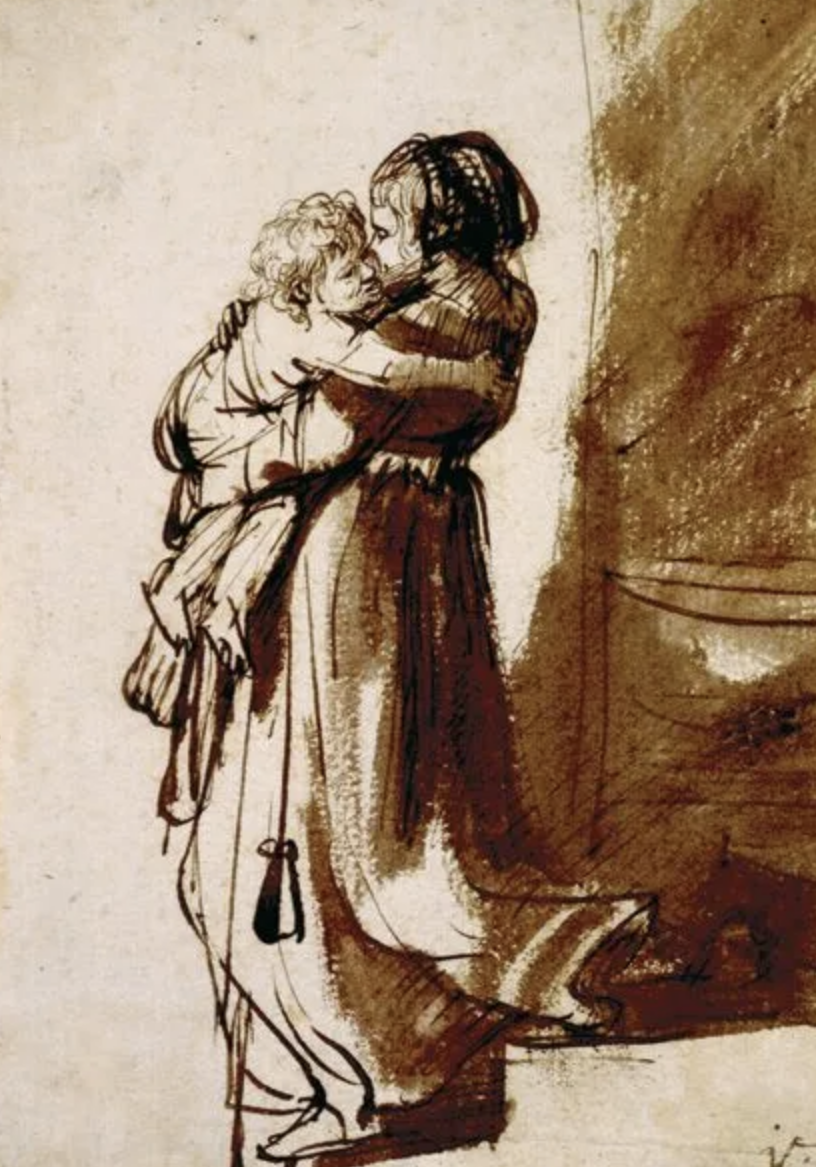
Rembrandt is known for his dramatic juxaposition of light and dark. Guess what, he learned that through drawing real scenes!
Speaking of foundations, I believe cultivating a “A Biblical View of Art” is the other most important foundation for learning art. Pursuing art as practice or profession can be frustrating and confusing. The more I study God’s word and ask God to teach me about what it means to be a Christian and an artist, the happier and more content and secure I have felt in how God has created me.
There are a gazillion philosophies out there. And art culture loves to wrestle with existential questions, perhaps more than other fields of study and work. If you don’t deliberately seek the truth and what you believe, a hodge-lodge of contradictory ideas will fill the void and it will be difficult to sort out the challenges related to being an artist. I believe having a firm understanding of who God is (He is THE Creator after all!), and what His word says in regards to art, creating, and work, has given me purpose and joy in the midst of difficulty.
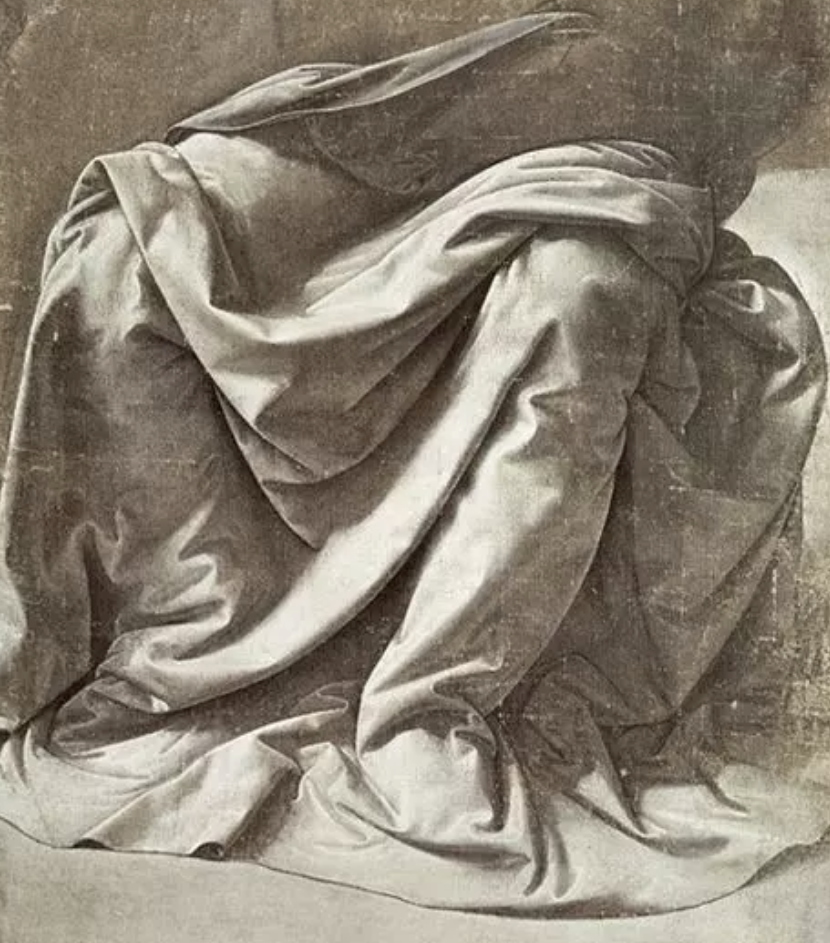
Da Vinci again…check out these incredible fabric folds! One of my favorite observational things to draw are people dressed in interesting costumes because it’s so fun to draw fabric folds and textures.
The second question: “Is there a future for my child to make a living as an artist?”
In short, the answer is yes. BUT, it is not easy. To make a living as an artist, you must have fortitude, focus, confidence, and creativity to make your own path when traditional industry doesn’t pay enough to cover the cost of groceries. You’ve got to have discipline and people skills as well as art skills. For those interested in careers as visual artists, the sooner you start building your fortitude muscles, the better!
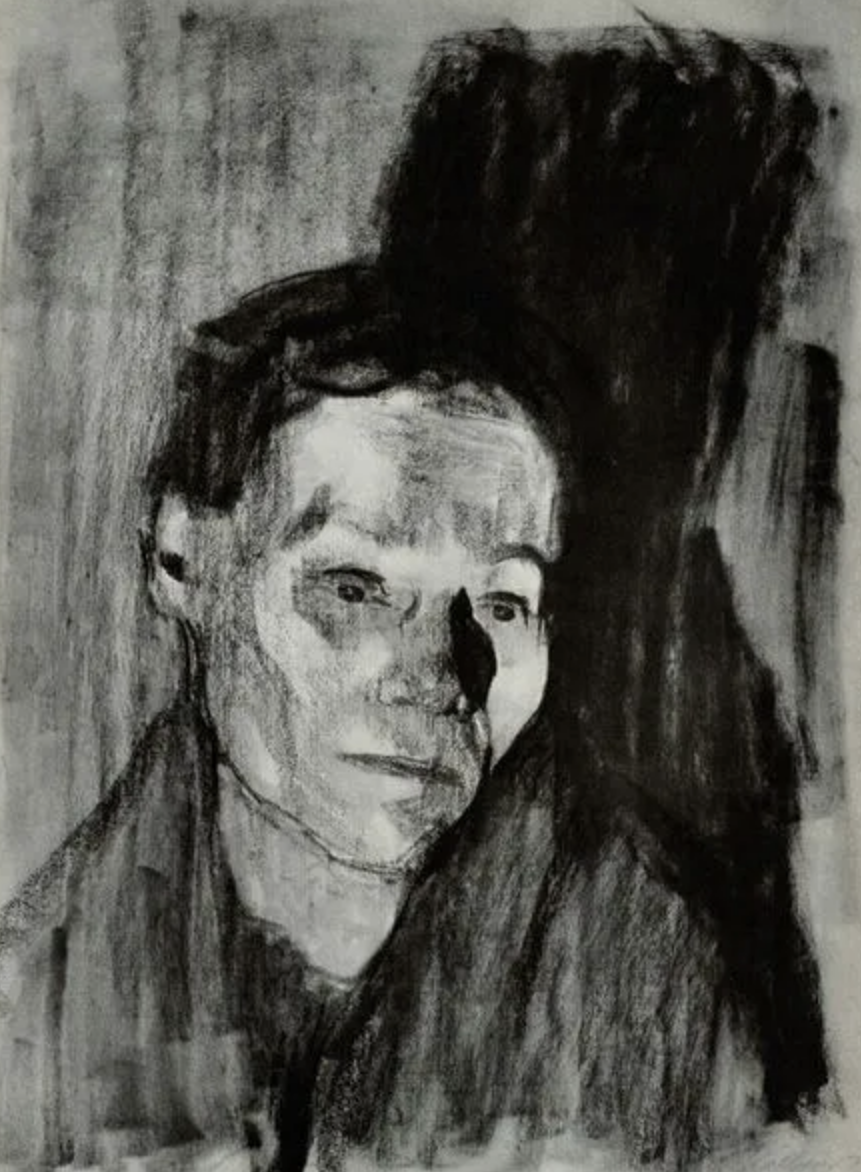
Observational drawing does not mean boring and emotionless. Kathe Kollwitz experienced a lot of suffering in her life. She mastered the ability to both express and invoke deep feeling in her drawings.
The third question is: “Do you ever give art classes?”
Yes! In fact, I’m planning an 8-week class this fall called Foundations in Drawing. I want to pass along the encouragement and training given to me by Elaine and other art teachers. I also want to share what I’ve learned working as an illustrator over the years. We will define what art is and start exploring how it fits into a biblical worldview.
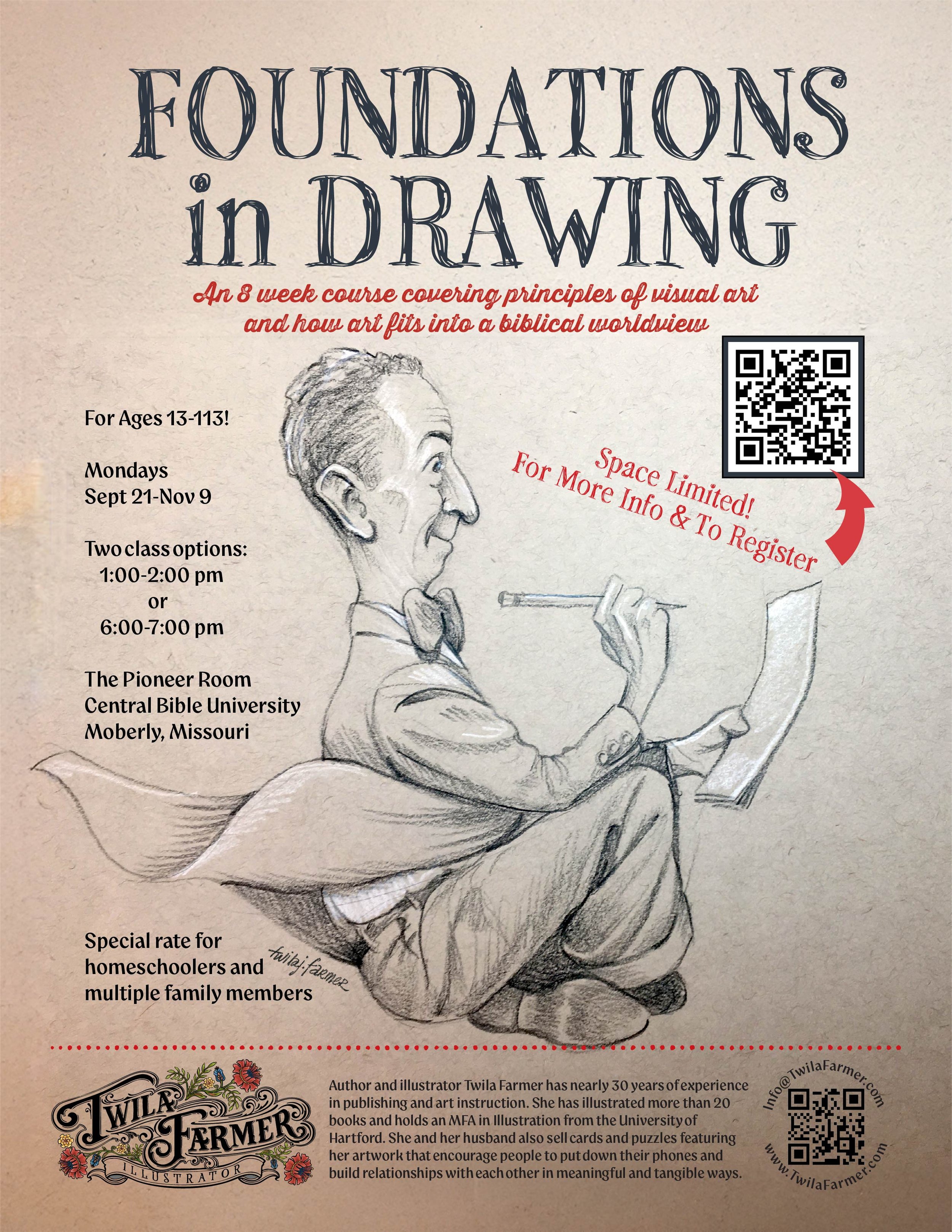
If there is enough interest, I plan to follow up this initial class with subsequent ones that build upon each other logically. These classes will cover everything from drawing, different mediums of painting, and color theory to digital tools, graphic design, and the business of art.
The class is for ages 13 on up because we will cover some college-level concepts and techniques.
I want this to be affordable for the student while covering my own costs, so there are several class options and price break-downs. There is a further price breakdown for multiple family members. People in the same households are welcome to share supplies.
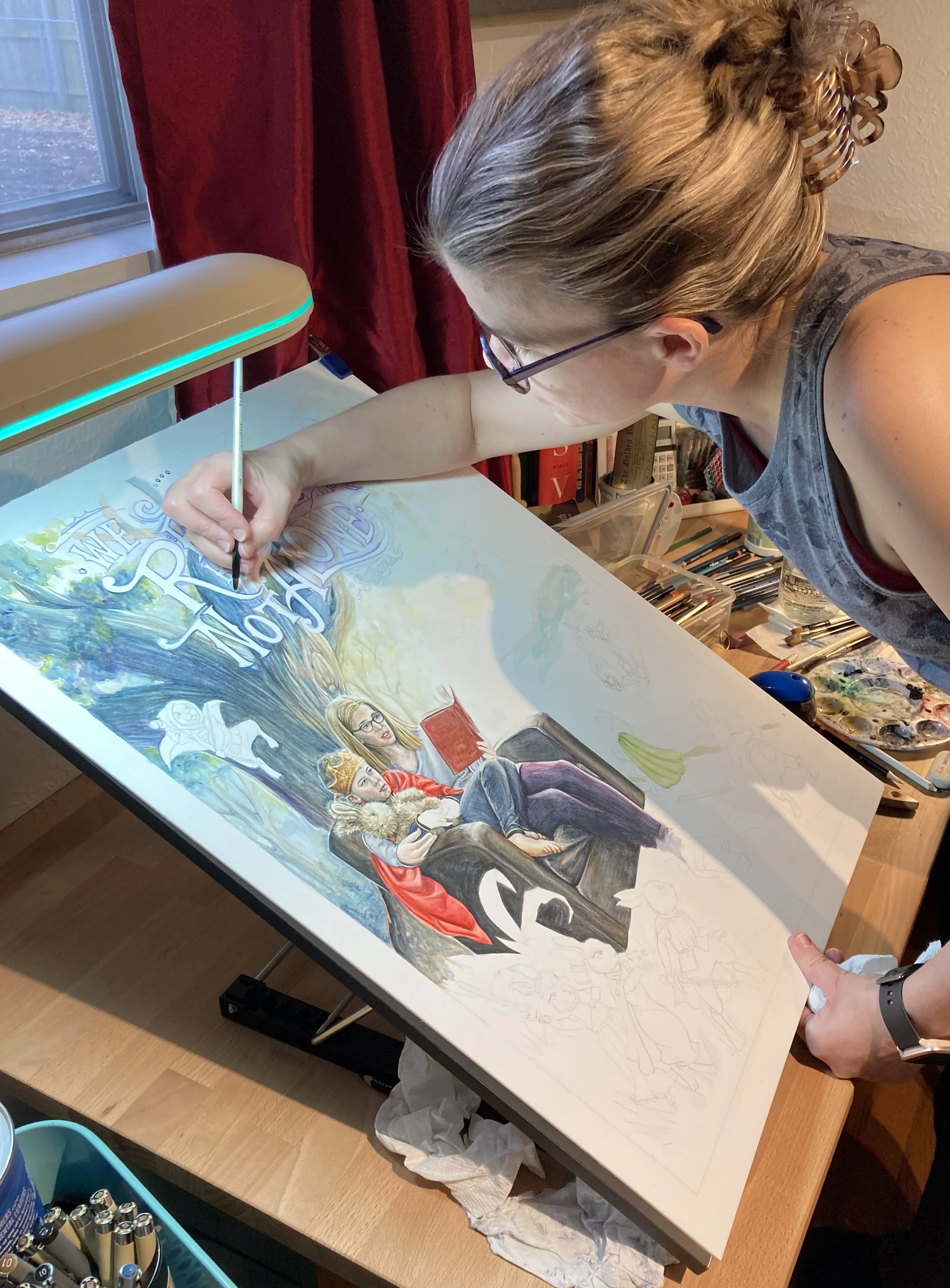
Every painting I do begins with preliminary drawings.
If this interests you, go to www.twilafarmer.com/classes for more information and to sign up. If you have a friend who might be interested, please pass this link along to them. Thanks!
I hope to write more on these and similar topics in the near future. So if this is up your alley, stay tuned.
Sincerely,
Twila